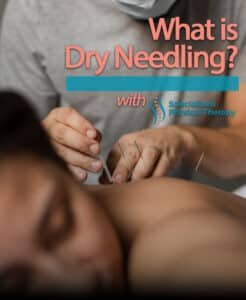
Dry needling is a technique used by physical therapists to help manage certain types of muscle pain, tension, and movement limitations. It involves inserting thin, sterile needles into targeted areas of the body, such as muscles and trigger points. It is called “dry” needling because the needles do not inject medication or another substance into the body. Instead, the goal is to target areas of muscle tension and trigger points that may be contributing to pain or limiting your movement. Dry needling is one of several techniques that may be incorporated into a physical therapy treatment plan depending on the patient’s individual needs.
One of the main reasons dry needling may be used is to address trigger points, which are tight or sensitive areas within a muscle that can contribute to discomfort and restricted movement. By targeting these areas, dry needling may help reduce muscle tension and improve mobility. Some patients may notice changes in their pain or range of motion following treatment, although everyone’s response can be different. Dry needling may be particularly useful as part of a larger rehabilitation program for people dealing with certain musculoskeletal injuries, muscle tightness, or movement restrictions.
Dry needling is not meant to replace physical therapy exercises or other forms of rehabilitation. Instead, it can be used alongside techniques such as stretching, strengthening exercises, mobility work, manual therapy, and movement training. Combining different approaches allows your physical therapist to address both your current symptoms and the underlying factors that may be contributing to them. Your therapist can determine whether dry needling is appropriate for you based on your symptoms, medical history, and individual treatment goals.
At Specialized Physical Therapy, our goal is to create a treatment plan that is specific to you and your recovery. If you’re experiencing persistent muscle pain, tightness, limited mobility, or a musculoskeletal injury, dry needling may be one treatment option that can be incorporated into your rehabilitation. Contact Specialized Physical Therapy today to schedule an evaluation and learn whether dry needling may be right for you.